
Additive Manufacturing: From Experimentation to Competitive Advantage
Additive manufacturing, more commonly known as 3D printing, has grown well beyond its early role as a prototyping tool. Today, it’s a viable production method across industries, especially when rapid iteration, customization, and complex designs matter. By building components layer by layer, additive manufacturing supports a wide range of materials, from biodegradable polymers to aluminum, titanium, and steel, opening the door to new possibilities in both design and overall performance.
One of its biggest advantages is reducing (or even eliminating) non-recurring expenses like tooling, which can shorten early fabrication timelines significantly. Additive manufacturing also makes it possible to produce geometries that are difficult (or flat-out impossible) with conventional methods. In many cases, it works best alongside traditional manufacturing rather than replacing it. For example, the process of printing form blocks for sheet-metal forming reduces both cost and cycle time, so the payoff is greater flexibility, faster development, and significantly lower risk.
The St. Louis region is already seeing this potential realized. Posie Pots, a local startup, uses additive manufacturing to produce their patented, self-watering planters with features well-suited for layered fabrication. Printerior is a St. Louis-based manufacturing and materials company that brings products to life using additive manufacturing at scale, and Circdal, a recently launched Printerior company, applies this proprietary 3D printing technology to design and fabricate modern, architectural surfaces for the built environment.
At AMICSTL, we help companies determine whether additive manufacturing is the right fit, both technically and economically. Through partnerships with Saint Louis University’s Center for Additive Manufacturing and other regional research organizations, we offer access to business modeling, material and process data, and functional prototypes. This allows teams to test feasibility, understand tradeoffs, and reduce risk before making major capital investments. Companies can also take advantage of a complimentary one-hour consultation to explore how additive manufacturing could strengthen their operations.
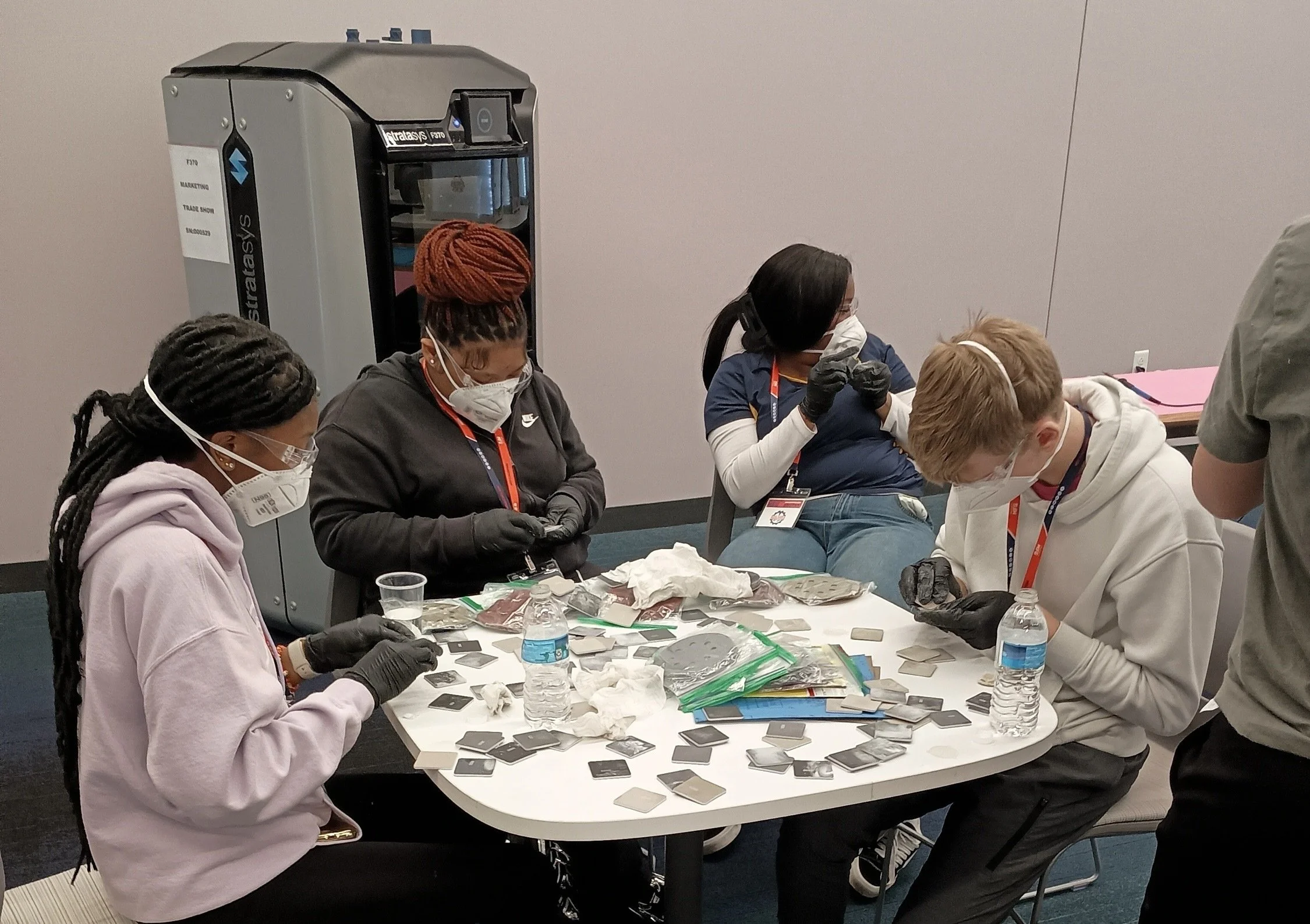
Equally important to a brighter manufacturing tomorrow is preparing the future workforce adequately and efficiently. AMICSTL engages K–12 students with hands-on exposure to additive technologies so they learn not just how parts are printed, but why design choices matter. For the past two years, AMICSTL and Project MFG have hosted an additive manufacturing competition where teams from St. Louis Metro region high schools design and print projects while considering surface finish, strength, and tolerances, mirroring real-world engineering challenges they could face in their later careers.
Additive manufacturing isn’t a one-size-fits-all solution, but when applied thoughtfully, it can be a powerful tool for innovation, efficiency, and competitiveness. Through applied research, prototyping, and workforce integration, AMICSTL is helping companies and communities better understand what’s possible and how to move from curiosity to capability.
Not sure where to start? Visit our website for a complimentary one-hour consultation that can help you assess whether additive manufacturing fits your goals and what the next step could look like: https://www.amicstl.org/free-consultation